Posts

Showing posts with the label Birds

Ferruginous Pochard

Image
 The 𝐟𝐞𝐫𝐫𝐮𝐠𝐢𝐧𝐨𝐮𝐬 𝐝𝐮𝐜𝐤 (𝐀𝐲𝐭𝐡𝐲𝐚 𝐧𝐲𝐫𝐨𝐜𝐚), also known as the 𝐟𝐞𝐫𝐫𝐮𝐠𝐢𝐧𝐨𝐮𝐬 𝐩𝐨𝐜𝐡𝐚𝐫𝐝, 𝐜𝐨𝐦𝐦𝐨𝐧 𝐰𝐡𝐢𝐭𝐞-𝐞𝐲𝐞 or 𝐰𝐡𝐢𝐭𝐞-𝐞𝐲𝐞𝐝 𝐩𝐨𝐜𝐡𝐚𝐫𝐝,is a 𝐦𝐞𝐝𝐢𝐮𝐦-𝐬𝐢𝐳𝐞𝐝 𝐝𝐢𝐯𝐢𝐧𝐠 𝐝𝐮𝐜𝐤 𝐧𝐚𝐭𝐢𝐯𝐞 to the 𝐏𝐚𝐥𝐞𝐚𝐫𝐜𝐭𝐢𝐜. The 𝐛𝐫𝐞𝐞𝐝𝐢𝐧𝐠 𝐦𝐚𝐥𝐞 is a 𝐫𝐢𝐜𝐡, 𝐝𝐚𝐫𝐤 𝐜𝐡𝐞𝐬𝐭𝐧𝐮𝐭 on the 𝐡𝐞𝐚𝐝, 𝐛𝐫𝐞𝐚𝐬𝐭 and 𝐟𝐥𝐚𝐧𝐤𝐬 with 𝐜𝐨𝐧𝐭𝐫𝐚𝐬𝐭𝐢𝐧𝐠 𝐩𝐮𝐫𝐞 𝐰𝐡𝐢𝐭𝐞 𝐮𝐧𝐝𝐞𝐫𝐭𝐚𝐢𝐥 𝐜𝐨𝐯𝐞𝐫𝐭𝐬. 𝐈𝐧 𝐟𝐥𝐢𝐠𝐡𝐭 the 𝐰𝐡𝐢𝐭𝐞 𝐛𝐞𝐥𝐥𝐲 and 𝐮𝐧𝐝𝐞𝐫𝐰𝐢𝐧𝐠 𝐩𝐚𝐭𝐜𝐡 are 𝐯𝐢𝐬𝐢𝐛𝐥𝐞. The 𝐟𝐞𝐦𝐚𝐥𝐞𝐬 are 𝐝𝐮𝐥𝐥𝐞𝐫 and 𝐛𝐫𝐨𝐰𝐧𝐞𝐫 than the 𝐦𝐚𝐥𝐞𝐬. The 𝐦𝐚𝐥𝐞 has a 𝐲𝐞𝐥𝐥𝐨𝐰 𝐞𝐲𝐞 and the 𝐟𝐞𝐦𝐚𝐥𝐞𝐬 have a 𝐝𝐚𝐫𝐤 𝐞𝐲𝐞. The 𝐟𝐞𝐫𝐫𝐮𝐠𝐢𝐧𝐨𝐮𝐬 𝐝𝐮𝐜𝐤 prefers 𝐪𝐮𝐢𝐭𝐞 𝐬𝐡𝐚𝐥𝐥𝐨𝐰 𝐟𝐫𝐞𝐬𝐡 𝐰𝐚𝐭𝐞𝐫𝐛𝐨𝐝𝐢𝐞𝐬 with 𝐫𝐢𝐜𝐡 𝐬𝐮𝐛𝐦𝐞𝐫𝐠𝐞𝐝 and 𝐟𝐥𝐨𝐚𝐭𝐢𝐧𝐠 𝐯𝐞𝐠𝐞𝐭𝐚𝐭𝐢𝐨𝐧 with 𝐝𝐞𝐧𝐬𝐞 𝐬𝐭𝐚𝐧𝐝𝐬 of 𝐞𝐦𝐞𝐫𝐠𝐞𝐧𝐭 𝐯𝐞𝐠𝐞𝐭𝐚𝐭𝐢𝐨𝐧 o...

Hood Mockingbird

Image
 The 𝐄𝐬𝐩𝐚ñ𝐨𝐥𝐚 𝐦𝐨𝐜𝐤𝐢𝐧𝐠𝐛𝐢𝐫𝐝 (𝐌𝐢𝐦𝐮𝐬 𝐦𝐚𝐜𝐝𝐨𝐧𝐚𝐥𝐝𝐢), 𝐚𝐥𝐬𝐨 𝐤𝐧𝐨𝐰𝐧 as the 𝐇𝐨𝐨𝐝 𝐦𝐨𝐜𝐤𝐢𝐧𝐠𝐛𝐢𝐫𝐝, is a 𝐬𝐩𝐞𝐜𝐢𝐞𝐬 of 𝐛𝐢𝐫𝐝 in the 𝐟𝐚𝐦𝐢𝐥𝐲 𝐌𝐢𝐦𝐢𝐝𝐚𝐞. It is 𝐞𝐧𝐝𝐞𝐦𝐢𝐜 to 𝐄𝐬𝐩𝐚ñ𝐨𝐥𝐚 𝐈𝐬𝐥𝐚𝐧𝐝 in the 𝐆𝐚𝐥á𝐩𝐚𝐠𝐨𝐬 𝐈𝐬𝐥𝐚𝐧𝐝𝐬, 𝐄𝐜𝐮𝐚𝐝𝐨𝐫, and is one of the 𝐟𝐨𝐮𝐫 𝐜𝐥𝐨𝐬𝐞𝐥𝐲 𝐫𝐞𝐥𝐚𝐭𝐞𝐝 𝐦𝐨𝐜𝐤𝐢𝐧𝐠𝐛𝐢𝐫𝐝 𝐬𝐩𝐞𝐜𝐢𝐞𝐬 𝐞𝐧𝐝𝐞𝐦𝐢𝐜 to the 𝐆𝐚𝐥á𝐩𝐚𝐠𝐨𝐬 𝐚𝐫𝐜𝐡𝐢𝐩𝐞𝐥𝐚𝐠𝐨. It is 𝐟𝐨𝐮𝐧𝐝 in 𝐝𝐫𝐲 𝐟𝐨𝐫𝐞𝐬𝐭𝐬 and is 𝐨𝐦𝐧𝐢𝐯𝐨𝐫𝐨𝐮𝐬, though it is primarily a 𝐜𝐚𝐫𝐧𝐢𝐯𝐨𝐫𝐞 or 𝐬𝐜𝐚𝐯𝐞𝐧𝐠𝐞𝐫. This 𝐬𝐩𝐞𝐜𝐢𝐞𝐬 has a 𝐦𝐨𝐭𝐭𝐥𝐞𝐝 𝐠𝐫𝐚𝐲 and 𝐛𝐫𝐨𝐰𝐧 𝐩𝐥𝐮𝐦𝐚𝐠𝐞 with a 𝐰𝐡𝐢𝐭𝐞 𝐮𝐧𝐝𝐞𝐫𝐛𝐞𝐥𝐥𝐲. A 𝐥𝐨𝐧𝐠 𝐭𝐚𝐢𝐥 and 𝐥𝐞𝐠𝐬 give the bird it's 𝐝𝐢𝐬𝐭𝐢𝐧𝐜𝐭𝐢𝐯𝐞 𝐚𝐩𝐩𝐞𝐚𝐫𝐚𝐧𝐜𝐞. The species has a 𝐥𝐨𝐧𝐠, 𝐭𝐡𝐢𝐧 𝐛𝐞𝐚𝐤, 𝐮𝐬𝐞𝐟𝐮𝐥 for 𝐭𝐚𝐩𝐩𝐢𝐧𝐠 into the 𝐞𝐠𝐠𝐬 of 𝐬𝐞𝐚𝐛𝐢𝐫𝐝𝐬. The species has the 𝐥𝐚𝐫𝐠𝐞𝐬𝐭 𝐛𝐢𝐥𝐥 of ...

Alpine Accentor

Image
 The 𝐚𝐥𝐩𝐢𝐧𝐞 𝐚𝐜𝐜𝐞𝐧𝐭𝐨𝐫 (𝐏𝐫𝐮𝐧𝐞𝐥𝐥𝐚 𝐜𝐨𝐥𝐥𝐚𝐫𝐢𝐬) is a 𝐬𝐦𝐚𝐥𝐥 𝐩𝐚𝐬𝐬𝐞𝐫𝐢𝐧𝐞 𝐛𝐢𝐫𝐝 in the 𝐟𝐚𝐦𝐢𝐥𝐲 𝐏𝐫𝐮𝐧𝐞𝐥𝐥𝐢𝐝𝐚𝐞, which is 𝐧𝐚𝐭𝐢𝐯𝐞 to 𝐄𝐮𝐫𝐚𝐬𝐢𝐚 and 𝐍𝐨𝐫𝐭𝐡 𝐀𝐟𝐫𝐢𝐜𝐚. This is a 𝐫𝐨𝐛𝐢𝐧-𝐬𝐢𝐳𝐞𝐝 𝐛𝐢𝐫𝐝 at 𝟏𝟓–𝟏𝟕.𝟓 𝐜𝐦 in 𝐥𝐞𝐧𝐠𝐭𝐡, 𝐬𝐥𝐢𝐠𝐡𝐭𝐥𝐲 𝐥𝐚𝐫𝐠𝐞𝐫 than it's relative, the 𝐝𝐮𝐧𝐧𝐨𝐜𝐤. It has a 𝐬𝐭𝐫𝐞𝐚𝐤𝐞𝐝 𝐛𝐫𝐨𝐰𝐧 𝐛𝐚𝐜𝐤, somewhat 𝐫𝐞𝐬𝐞𝐦𝐛𝐥𝐢𝐧𝐠 a 𝐡𝐨𝐮𝐬𝐞 𝐬𝐩𝐚𝐫𝐫𝐨𝐰, but 𝐚𝐝𝐮𝐥𝐭𝐬 have an 𝐚𝐥𝐥-𝐠𝐫𝐞𝐲 𝐡𝐞𝐚𝐝 and 𝐫𝐞𝐝-𝐛𝐫𝐨𝐰𝐧 𝐬𝐩𝐨𝐭𝐭𝐢𝐧𝐠 on the 𝐮𝐧𝐝𝐞𝐫𝐩𝐚𝐫𝐭𝐬. It has an 𝐢𝐧𝐬𝐞𝐜𝐭𝐢𝐯𝐨𝐫𝐞'𝐬 𝐟𝐢𝐧𝐞 𝐩𝐨𝐢𝐧𝐭𝐞𝐝 𝐛𝐢𝐥𝐥. It is 𝐟𝐨𝐮𝐧𝐝 throughout the 𝐦𝐨𝐮𝐧𝐭𝐚𝐢𝐧𝐬 of 𝐬𝐨𝐮𝐭𝐡𝐞𝐫𝐧 𝐭𝐞𝐦𝐩𝐞𝐫𝐚𝐭𝐞 𝐄𝐮𝐫𝐨𝐩𝐞, 𝐋𝐞𝐛𝐚𝐧𝐨𝐧 and 𝐀𝐬𝐢𝐚 at 𝐡𝐞𝐢𝐠𝐡𝐭𝐬 𝐚𝐛𝐨𝐯𝐞 𝟐,𝟎𝟎𝟎 𝐦.It is 𝐦𝐚𝐢𝐧𝐥𝐲 𝐫𝐞𝐬𝐢𝐝𝐞𝐧𝐭, 𝐰𝐢𝐧𝐭𝐞𝐫𝐢𝐧𝐠 more widely at 𝐥𝐨𝐰𝐞𝐫 𝐥𝐚𝐭𝐢𝐭𝐮𝐝𝐞𝐬.It is a bird of 𝐛𝐚𝐫𝐞 𝐦𝐨𝐮𝐧𝐭𝐚𝐢𝐧 𝐚𝐫...

Eurasian Curlew

Image
 The 𝐄𝐮𝐫𝐚𝐬𝐢𝐚𝐧 𝐜𝐮𝐫𝐥𝐞𝐰 or 𝐜𝐨𝐦𝐦𝐨𝐧 𝐜𝐮𝐫𝐥𝐞𝐰 (𝐍𝐮𝐦𝐞𝐧𝐢𝐮𝐬 𝐚𝐫𝐪𝐮𝐚𝐭𝐚) is a 𝐯𝐞𝐫𝐲 𝐥𝐚𝐫𝐠𝐞 𝐰𝐚𝐝𝐞𝐫 in the 𝐟𝐚𝐦𝐢𝐥𝐲 𝐒𝐜𝐨𝐥𝐨𝐩𝐚𝐜𝐢𝐝𝐚𝐞.It is one of the 𝐦𝐨𝐬𝐭 𝐰𝐢𝐝𝐞𝐬𝐩𝐫𝐞𝐚𝐝 of the 𝐜𝐮𝐫𝐥𝐞𝐰𝐬, 𝐛𝐫𝐞𝐞𝐝𝐢𝐧𝐠 𝐚𝐜𝐫𝐨𝐬𝐬 𝐭𝐞𝐦𝐩𝐞𝐫𝐚𝐭𝐞 𝐄𝐮𝐫𝐨𝐩𝐞 and 𝐀𝐬𝐢𝐚. The 𝐄𝐮𝐫𝐚𝐬𝐢𝐚𝐧 𝐜𝐮𝐫𝐥𝐞𝐰 is the 𝐥𝐚𝐫𝐠𝐞𝐬𝐭 𝐰𝐚𝐝𝐢𝐧𝐠 𝐛𝐢𝐫𝐝 in its 𝐫𝐚𝐧𝐠𝐞. It is 𝟓𝟎–𝟔𝟎 𝐜𝐦 𝐥𝐨𝐧𝐠, has a 𝐰𝐢𝐧𝐠𝐬𝐩𝐚𝐧 of 𝟖𝟗–𝟏𝟎𝟔 𝐜𝐦 and 𝐰𝐞𝐢𝐠𝐡𝐬 𝟒𝟏𝟎–𝟏,𝟑𝟔𝟎 𝐠.It is 𝐠𝐫𝐞𝐲𝐢𝐬𝐡 𝐛𝐫𝐨𝐰𝐧, with a 𝐰𝐡𝐢𝐭𝐞 𝐛𝐚𝐜𝐤, 𝐠𝐫𝐞𝐲𝐢𝐬𝐡-𝐛𝐥𝐮𝐞 𝐥𝐞𝐠𝐬 and a 𝐯𝐞𝐫𝐲 𝐥𝐨𝐧𝐠 𝐜𝐮𝐫𝐯𝐞𝐝 𝐛𝐢𝐥𝐥. The 𝐜𝐮𝐫𝐥𝐞𝐰 is a 𝐦𝐢𝐠𝐫𝐚𝐭𝐨𝐫𝐲 𝐬𝐩𝐞𝐜𝐢𝐞𝐬 over most of its range, 𝐰𝐢𝐧𝐭𝐞𝐫𝐢𝐧𝐠 in 𝐀𝐟𝐫𝐢𝐜𝐚, 𝐬𝐨𝐮𝐭𝐡𝐞𝐫𝐧 𝐄𝐮𝐫𝐨𝐩𝐞 and 𝐬𝐨𝐮𝐭𝐡𝐞𝐫𝐧 𝐀𝐬𝐢𝐚. It is 𝐩𝐫𝐞𝐬𝐞𝐧𝐭 𝐚𝐥𝐥 𝐲𝐞𝐚𝐫 𝐫𝐨𝐮𝐧𝐝 in 𝐚𝐫𝐞𝐚𝐬 with 𝐦𝐢𝐥𝐝𝐞𝐫 𝐜𝐥𝐢𝐦𝐚𝐭𝐞𝐬, such as 𝐈𝐫𝐞𝐥𝐚𝐧𝐝 and the 𝐔𝐧𝐢𝐭𝐞𝐝 𝐊?...

Brown Shrike

Image
 The 𝐛𝐫𝐨𝐰𝐧 𝐬𝐡𝐫𝐢𝐤𝐞 (𝐋𝐚𝐧𝐢𝐮𝐬 𝐜𝐫𝐢𝐬𝐭𝐚𝐭𝐮𝐬) is a bird in the 𝐬𝐡𝐫𝐢𝐤𝐞 𝐟𝐚𝐦𝐢𝐥𝐲 that is 𝐟𝐨𝐮𝐧𝐝 𝐦𝐚𝐢𝐧𝐥𝐲 in 𝐀𝐬𝐢𝐚. It is 𝐜𝐥𝐨𝐬𝐞𝐥𝐲 𝐫𝐞𝐥𝐚𝐭𝐞𝐝 to the 𝐫𝐞𝐝-𝐛𝐚𝐜𝐤𝐞𝐝 𝐬𝐡𝐫𝐢𝐤𝐞 and 𝐢𝐬𝐚𝐛𝐞𝐥𝐥𝐢𝐧𝐞 𝐬𝐡𝐫𝐢𝐤𝐞. Like 𝐦𝐨𝐬𝐭 𝐨𝐭𝐡𝐞𝐫 𝐬𝐡𝐫𝐢𝐤𝐞𝐬, it has a 𝐝𝐢𝐬𝐭𝐢𝐧𝐜𝐭𝐢𝐯𝐞 𝐛𝐥𝐚𝐜𝐤 "𝐛𝐚𝐧𝐝𝐢𝐭-𝐦𝐚𝐬𝐤" 𝐭𝐡𝐫𝐨𝐮𝐠𝐡 the 𝐞𝐲𝐞.This Shrike is 𝐦𝐚𝐢𝐧𝐥𝐲 𝐛𝐫𝐨𝐰𝐧 on the 𝐮𝐩𝐩𝐞𝐫 𝐩𝐚𝐫𝐭𝐬 and the 𝐭𝐚𝐢𝐥 is 𝐫𝐨𝐮𝐧𝐝𝐞𝐝. The 𝐛𝐥𝐚𝐜𝐤 𝐦𝐚𝐬𝐤 can be 𝐩𝐚𝐥𝐞𝐫 in 𝐰𝐢𝐧𝐭𝐞𝐫 and has a 𝐰𝐡𝐢𝐭𝐞 𝐛𝐫𝐨𝐰 over it. 𝐓𝐡𝐞 𝐮𝐧𝐝𝐞𝐫𝐬𝐢𝐝𝐞 is 𝐜𝐫𝐞𝐚𝐦𝐲 with 𝐫𝐮𝐟𝐨𝐮𝐬 𝐟𝐥𝐚𝐧𝐤𝐬 and 𝐛𝐞𝐥𝐥𝐲. The 𝐰𝐢𝐧𝐠𝐬 are 𝐛𝐫𝐨𝐰𝐧 and 𝐥𝐚𝐜𝐤 any 𝐰𝐡𝐢𝐭𝐞 "𝐦𝐢𝐫𝐫𝐨𝐫" 𝐩𝐚𝐭𝐜𝐡𝐞𝐬. 𝐅𝐞𝐦𝐚𝐥𝐞𝐬 tend to have 𝐟𝐢𝐧𝐞 𝐬𝐜𝐚𝐥𝐥𝐨𝐩𝐢𝐧𝐠 on the 𝐮𝐧𝐝𝐞𝐫𝐬𝐢𝐝𝐞 and the 𝐦𝐚𝐬𝐤 is 𝐝𝐚𝐫𝐤 𝐛𝐫𝐨𝐰𝐧 and 𝐧𝐨𝐭 as 𝐰𝐞𝐥𝐥 𝐦𝐚𝐫𝐤𝐞𝐝 as in the 𝐦𝐚𝐥𝐞. It is 𝐟𝐨𝐮𝐧𝐝 𝐦𝐚...

Slender - billed gull

Image
 The 𝐬𝐥𝐞𝐧𝐝𝐞𝐫-𝐛𝐢𝐥𝐥𝐞𝐝 𝐠𝐮𝐥𝐥 (𝐂𝐡𝐫𝐨𝐢𝐜𝐨𝐜𝐞𝐩𝐡𝐚𝐥𝐮𝐬 𝐠𝐞𝐧𝐞𝐢)  is a 𝐦𝐢𝐝-𝐬𝐢𝐳𝐞𝐝 𝐠𝐮𝐥𝐥 which 𝐛𝐫𝐞𝐞𝐝𝐬 very locally around the 𝐌𝐞𝐝𝐢𝐭𝐞𝐫𝐫𝐚𝐧𝐞𝐚𝐧 and the 𝐧𝐨𝐫𝐭𝐡 of the 𝐰𝐞𝐬𝐭𝐞𝐫𝐧 𝐈𝐧𝐝𝐢𝐚𝐧 𝐎𝐜𝐞𝐚𝐧 on 𝐢𝐬𝐥𝐚𝐧𝐝𝐬 and 𝐜𝐨𝐚𝐬𝐭𝐚𝐥 𝐥𝐚𝐠𝐨𝐨𝐧𝐬. Most of the population is somewhat 𝐦𝐢𝐠𝐫𝐚𝐭𝐨𝐫𝐲, 𝐰𝐢𝐧𝐭𝐞𝐫𝐢𝐧𝐠 𝐟𝐮𝐫𝐭𝐡𝐞𝐫 𝐬𝐨𝐮𝐭𝐡 to as far as 𝐍𝐨𝐫𝐭𝐡 𝐀𝐟𝐫𝐢𝐜𝐚 and 𝐈𝐧𝐝𝐢𝐚. This species is 𝟑𝟕 to 𝟒𝟎 𝐜𝐦 𝐥𝐨𝐧𝐠 with a 𝟗𝟎 to 𝟏𝟎𝟐 𝐜𝐦 𝐰𝐢𝐧𝐠𝐬𝐩𝐚𝐧.It has a 𝐩𝐚𝐥𝐞 𝐠𝐫𝐞𝐲 𝐛𝐨𝐝𝐲, 𝐰𝐡𝐢𝐭𝐞 𝐡𝐞𝐚𝐝 and 𝐛𝐫𝐞𝐚𝐬𝐭 and 𝐛𝐥𝐚𝐜𝐤 𝐭𝐢𝐩𝐬 to the 𝐩𝐫𝐢𝐦𝐚𝐫𝐲 𝐰𝐢𝐧𝐠 𝐟𝐞𝐚𝐭𝐡𝐞𝐫𝐬.  The 𝐬𝐥𝐞𝐧𝐝𝐞𝐫-𝐛𝐢𝐥𝐥𝐞𝐝 𝐠𝐮𝐥𝐥 𝐛𝐫𝐞𝐞𝐝𝐬 in 𝐥𝐚𝐠𝐨𝐨𝐧𝐬 and 𝐥𝐚𝐤𝐞𝐬 around the 𝐌𝐞𝐝𝐢𝐭𝐞𝐫𝐫𝐚𝐧𝐞𝐚𝐧 𝐒𝐞𝐚 and in similar locations in 𝐜𝐨𝐮𝐧𝐭𝐫𝐢𝐞𝐬 𝐛𝐨𝐫𝐝𝐞𝐫𝐢𝐧𝐠 the 𝐧𝐨𝐫𝐭𝐡𝐰𝐞𝐬𝐭𝐞𝐫𝐧 𝐩𝐚𝐫𝐭 of the 𝐈𝐧𝐝𝐢𝐚𝐧 𝐎𝐜𝐞𝐚𝐧. It 𝐨𝐯𝐞𝐫𝐰𝐢𝐧𝐭𝐞𝐫...

Whiskered Tern

Image
 The 𝐰𝐡𝐢𝐬𝐤𝐞𝐫𝐞𝐝 𝐭𝐞𝐫𝐧 (𝐂𝐡𝐥𝐢𝐝𝐨𝐧𝐢𝐚𝐬 𝐡𝐲𝐛𝐫𝐢𝐝𝐚) is a species of tern in the 𝐟𝐚𝐦𝐢𝐥𝐲 𝐋𝐚𝐫𝐢𝐝𝐚𝐞. The 𝐬𝐩𝐞𝐜𝐢𝐟𝐢𝐜 𝐧𝐚𝐦𝐞 𝐡𝐲𝐛𝐫𝐢𝐝𝐮𝐬 is 𝐋𝐚𝐭𝐢𝐧 for 𝐡𝐲𝐛𝐫𝐢𝐝; 𝐏𝐞𝐭𝐞𝐫 𝐒𝐢𝐦𝐨𝐧 𝐏𝐚𝐥𝐥𝐚𝐬 thought it might be a hybrid of 𝐰𝐡𝐢𝐭𝐞-𝐰𝐢𝐧𝐠𝐞𝐝 𝐛𝐥𝐚𝐜𝐤 𝐭𝐞𝐫𝐧 and 𝐜𝐨𝐦𝐦𝐨𝐧 𝐭𝐞𝐫𝐧. The 𝐬𝐢𝐳𝐞, 𝐛𝐥𝐚𝐜𝐤 𝐜𝐚𝐩, 𝐬𝐭𝐫𝐨𝐧𝐠 𝐛𝐢𝐥𝐥 (𝟐𝟗–𝟑𝟒 𝐦𝐦 in 𝐦𝐚𝐥𝐞𝐬, 𝟐𝟓–𝟐𝟕 𝐦𝐦 in 𝐟𝐞𝐦𝐚𝐥𝐞𝐬) and 𝐦𝐨𝐫𝐞 𝐩𝐨𝐬𝐢𝐭𝐢𝐯𝐞 𝐟𝐥𝐢𝐠𝐡𝐭 𝐫𝐞𝐜𝐚𝐥𝐥 𝐜𝐨𝐦𝐦𝐨𝐧 or 𝐀𝐫𝐜𝐭𝐢𝐜 𝐭𝐞𝐫𝐧, but the 𝐬𝐡𝐨𝐫𝐭, 𝐟𝐨𝐫𝐤𝐞𝐝-𝐥𝐨𝐨𝐤𝐢𝐧𝐠 𝐭𝐚𝐢𝐥 and 𝐝𝐚𝐫𝐤 𝐠𝐫𝐞𝐲 𝐛𝐫𝐞𝐞𝐝𝐢𝐧𝐠 𝐩𝐥𝐮𝐦𝐚𝐠𝐞 𝐚𝐛𝐨𝐯𝐞 and 𝐛𝐞𝐥𝐨𝐰 are typically 𝐦𝐚𝐫𝐬𝐡 𝐭𝐞𝐫𝐧 𝐜𝐡𝐚𝐫𝐚𝐜𝐭𝐞𝐫𝐢𝐬𝐭𝐢𝐜𝐬. The 𝐬𝐮𝐦𝐦𝐞𝐫 𝐚𝐝𝐮𝐥𝐭 has 𝐰𝐡𝐢𝐭𝐞 𝐜𝐡𝐞𝐞𝐤𝐬 and 𝐫𝐞𝐝 𝐥𝐞𝐠𝐬 and 𝐛𝐢𝐥𝐥.In 𝐰𝐢𝐧𝐭𝐞𝐫, the 𝐟𝐨𝐫𝐞𝐡𝐞𝐚𝐝 becomes 𝐰𝐡𝐢𝐭𝐞 and the 𝐛𝐨𝐝𝐲 𝐩𝐥𝐮𝐦𝐚𝐠𝐞 a much 𝐩𝐚𝐥𝐞𝐫 𝐠𝐫𝐞𝐲. 𝐉𝐮𝐯𝐞𝐧𝐢𝐥𝐞 whiskered ...

Garganey

Image
 The 𝐠𝐚𝐫𝐠𝐚𝐧𝐞𝐲 (𝐒𝐩𝐚𝐭𝐮𝐥𝐚 𝐪𝐮𝐞𝐫𝐪𝐮𝐞𝐝𝐮𝐥𝐚) is a 𝐬𝐦𝐚𝐥𝐥 𝐝𝐚𝐛𝐛𝐥𝐢𝐧𝐠 𝐝𝐮𝐜𝐤.Their 𝐛𝐫𝐞𝐞𝐝𝐢𝐧𝐠 𝐡𝐚𝐛𝐢𝐭𝐚𝐭 is 𝐠𝐫𝐚𝐬𝐬𝐥𝐚𝐧𝐝 𝐚𝐝𝐣𝐚𝐜𝐞𝐧𝐭 to 𝐬𝐡𝐚𝐥𝐥𝐨𝐰 𝐦𝐚𝐫𝐬𝐡𝐞𝐬 and 𝐬𝐭𝐞𝐩𝐩𝐞 𝐥𝐚𝐤𝐞𝐬. The 𝐚𝐝𝐮𝐥𝐭 𝐦𝐚𝐥𝐞 has a 𝐛𝐫𝐨𝐰𝐧 𝐡𝐞𝐚𝐝 and 𝐛𝐫𝐞𝐚𝐬𝐭 with a 𝐛𝐫𝐨𝐚𝐝 𝐰𝐡𝐢𝐭𝐞 𝐜𝐫𝐞𝐬𝐜𝐞𝐧𝐭 𝐨𝐯𝐞𝐫 the 𝐞𝐲𝐞. The rest of the 𝐩𝐥𝐮𝐦𝐚𝐠𝐞 is 𝐠𝐫𝐞𝐲, with 𝐥𝐨𝐨𝐬𝐞 𝐠𝐫𝐞𝐲 𝐬𝐜𝐚𝐩𝐮𝐥𝐚𝐫 𝐟𝐞𝐚𝐭𝐡𝐞𝐫𝐬. It has a 𝐠𝐫𝐞𝐲 𝐛𝐢𝐥𝐥 and 𝐥𝐞𝐠𝐬. 𝐈𝐧 𝐟𝐥𝐢𝐠𝐡𝐭, it shows a 𝐩𝐚𝐥𝐞 𝐛𝐥𝐮𝐞 𝐬𝐩𝐞𝐜𝐮𝐥𝐮𝐦 with a 𝐰𝐡𝐢𝐭𝐞 𝐛𝐨𝐫𝐝𝐞𝐫. When 𝐬𝐰𝐢𝐦𝐦𝐢𝐧𝐠, it will show 𝐩𝐫𝐨𝐦𝐢𝐧𝐞𝐧𝐭 𝐰𝐡𝐢𝐭𝐞 𝐞𝐝𝐠𝐞𝐬 on its 𝐭𝐞𝐫𝐭𝐢𝐚𝐥𝐬. It's 𝐜𝐫𝐨𝐰𝐧 is 𝐝𝐚𝐫𝐤 and its 𝐟𝐚𝐜𝐞 is 𝐫𝐞𝐝𝐝𝐢𝐬𝐡 𝐛𝐫𝐨𝐰𝐧. It 𝐛𝐫𝐞𝐞𝐝𝐬 in much of 𝐄𝐮𝐫𝐨𝐩𝐞 and 𝐚𝐜𝐫𝐨𝐬𝐬 the 𝐏𝐚𝐥𝐞𝐚𝐫𝐜𝐭𝐢𝐜, but is 𝐬𝐭𝐫𝐢𝐜𝐭𝐥𝐲 𝐦𝐢𝐠𝐫𝐚𝐭𝐨𝐫𝐲, with the 𝐞𝐧𝐭𝐢𝐫𝐞 𝐩𝐨𝐩𝐮𝐥𝐚𝐭𝐢𝐨𝐧 𝐦𝐨𝐯𝐢𝐧𝐠 to 𝐀𝐟𝐫𝐢𝐜𝐚, ...

Brown Headed Gull

Image
 The 𝐛𝐫𝐨𝐰𝐧-𝐡𝐞𝐚𝐝𝐞𝐝 𝐠𝐮𝐥𝐥 (𝐂𝐡𝐫𝐨𝐢𝐜𝐨𝐜𝐞𝐩𝐡𝐚𝐥𝐮𝐬 𝐛𝐫𝐮𝐧𝐧𝐢𝐜𝐞𝐩𝐡𝐚𝐥𝐮𝐬) is a 𝐬𝐦𝐚𝐥𝐥 𝐠𝐮𝐥𝐥 which 𝐛𝐫𝐞𝐞𝐝𝐬    in the 𝐡𝐢𝐠𝐡 𝐩𝐥𝐚𝐭𝐞𝐚𝐮𝐬 of 𝐜𝐞𝐧𝐭𝐫𝐚𝐥 𝐀𝐬𝐢𝐚 from 𝐓𝐚𝐣𝐢𝐤𝐢𝐬𝐭𝐚𝐧 to 𝐎𝐫𝐝𝐨𝐬 in 𝐈𝐧𝐧𝐞𝐫 𝐌𝐨𝐧𝐠𝐨𝐥𝐢𝐚. It is 𝐦𝐢𝐠𝐫𝐚𝐭𝐨𝐫𝐲, 𝐰𝐢𝐧𝐭𝐞𝐫𝐢𝐧𝐠 on the 𝐜𝐨𝐚𝐬𝐭𝐬 and 𝐥𝐚𝐫𝐠𝐞 𝐢𝐧𝐥𝐚𝐧𝐝 𝐥𝐚𝐤𝐞𝐬 of the 𝐈𝐧𝐝𝐢𝐚𝐧 𝐒𝐮𝐛𝐜𝐨𝐧𝐭𝐢𝐧𝐞𝐧𝐭. As is the case with 𝐦𝐚𝐧𝐲 𝐠𝐮𝐥𝐥𝐬, was traditionally  placed in the 𝐠𝐞𝐧𝐮𝐬 𝐋𝐚𝐫𝐮𝐬. The 𝐬𝐮𝐦𝐦𝐞𝐫 𝐚𝐝𝐮𝐥𝐭 has a 𝐩𝐚𝐥𝐞 𝐛𝐫𝐨𝐰𝐧 𝐡𝐞𝐚𝐝, 𝐥𝐢𝐠𝐡𝐭𝐞𝐫 than that of 𝐛𝐥𝐚𝐜𝐤-𝐡𝐞𝐚𝐝𝐞𝐝,a 𝐩𝐚𝐥𝐞 𝐠𝐫𝐞𝐲 𝐛𝐨𝐝𝐲, and 𝐫𝐞𝐝 𝐛𝐢𝐥𝐥 and 𝐥𝐞𝐠𝐬. The 𝐛𝐥𝐚𝐜𝐤 𝐭𝐢𝐩𝐬 to the 𝐩𝐫𝐢𝐦𝐚𝐫𝐲 𝐰𝐢𝐧𝐠 𝐟𝐞𝐚𝐭𝐡𝐞𝐫𝐬 have 𝐜𝐨𝐧𝐬𝐩𝐢𝐜𝐮𝐨𝐮𝐬 𝐰𝐡𝐢𝐭𝐞 "𝐦𝐢𝐫𝐫𝐨𝐫𝐬". The 𝐮𝐧𝐝𝐞𝐫𝐰𝐢𝐧𝐠 is 𝐠𝐫𝐞𝐲 with 𝐛𝐥𝐚𝐜𝐤 𝐟𝐥𝐢𝐠𝐡𝐭 𝐟𝐞𝐚𝐭𝐡𝐞𝐫𝐬. The 𝐛𝐫𝐨𝐰𝐧 𝐡𝐨𝐨𝐝 is 𝐥𝐨𝐬𝐭 in 𝐰𝐢𝐧𝐭𝐞𝐫, 𝐥𝐞𝐚𝐯𝐢?...

Intermediate Egret

Image
 The 𝐦𝐞𝐝𝐢𝐮𝐦 𝐞𝐠𝐫𝐞𝐭 (𝐀𝐫𝐝𝐞𝐚 𝐢𝐧𝐭𝐞𝐫𝐦𝐞𝐝𝐢𝐚), 𝐦𝐞𝐝𝐢𝐚𝐧 𝐞𝐠𝐫𝐞𝐭, 𝐬𝐦𝐚𝐥𝐥𝐞𝐫 𝐞𝐠𝐫𝐞𝐭 or 𝐢𝐧𝐭𝐞𝐫𝐦𝐞𝐝𝐢𝐚𝐭𝐞 𝐞𝐠𝐫𝐞𝐭, is a 𝐦𝐞𝐝𝐢𝐮𝐦-𝐬𝐢𝐳𝐞𝐝 𝐡𝐞𝐫𝐨𝐧. Some 𝐭𝐚𝐱𝐨𝐧𝐨𝐦𝐢𝐬𝐭𝐬 put the species in the 𝐠𝐞𝐧𝐮𝐬 𝐄𝐠𝐫𝐞𝐭𝐭𝐚 or 𝐌𝐞𝐬𝐨𝐩𝐡𝐨𝐲𝐱. It is a 𝐫𝐞𝐬𝐢𝐝𝐞𝐧𝐭 𝐛𝐫𝐞𝐞𝐝𝐞𝐫 in 𝐬𝐨𝐮𝐭𝐡𝐞𝐫𝐧 and 𝐞𝐚𝐬𝐭𝐞𝐫𝐧 𝐀𝐬𝐢𝐚. The 𝐦𝐞𝐝𝐢𝐮𝐦 𝐞𝐠𝐫𝐞𝐭 is 𝐢𝐧𝐭𝐞𝐫𝐦𝐞𝐝𝐢𝐚𝐭𝐞 in 𝐬𝐢𝐳𝐞 between the 𝐠𝐫𝐞𝐚𝐭 𝐞𝐠𝐫𝐞𝐭 and 𝐬𝐦𝐚𝐥𝐥𝐞𝐫 𝐰𝐡𝐢𝐭𝐞 𝐞𝐠𝐫𝐞𝐭𝐬 like the 𝐥𝐢𝐭𝐭𝐥𝐞 𝐞𝐠𝐫𝐞𝐭 and 𝐜𝐚𝐭𝐭𝐥𝐞 𝐞𝐠𝐫𝐞𝐭. It is about 𝟓𝟔–𝟕𝟐 𝐜𝐦 𝐥𝐨𝐧𝐠 with a 𝟏𝟎𝟓–𝟏𝟏𝟓 𝐜𝐦 𝐰𝐢𝐧𝐠𝐬𝐩𝐚𝐧 and 𝐰𝐞𝐢𝐠𝐡𝐬 𝟒𝟎𝟎 𝐠 with 𝐚𝐥𝐥-𝐰𝐡𝐢𝐭𝐞 𝐩𝐥𝐮𝐦𝐚𝐠𝐞, 𝐠𝐞𝐧𝐞𝐫𝐚𝐥𝐥𝐲 𝐝𝐚𝐫𝐤 𝐥𝐞𝐠𝐬 and a 𝐭𝐡𝐢𝐜𝐤𝐢𝐬𝐡 𝐲𝐞𝐥𝐥𝐨𝐰 𝐛𝐢𝐥𝐥. The 𝐬𝐞𝐱𝐞𝐬 are 𝐬𝐢𝐦𝐢𝐥𝐚𝐫. The 𝐦𝐞𝐝𝐢𝐮𝐦 𝐞𝐠𝐫𝐞𝐭 𝐬𝐭𝐚𝐥𝐤𝐬 its 𝐩𝐫𝐞𝐲 𝐦𝐞𝐭𝐡𝐨𝐝𝐢𝐜𝐚𝐥𝐥𝐲 in 𝐬𝐡𝐚𝐥𝐥𝐨𝐰 𝐜𝐨𝐚𝐬𝐭𝐚𝐥 or 𝐟𝐫𝐞𝐬𝐡 𝐰𝐚𝐭𝐞𝐫, inc...

Pied Avocet

Image
 The 𝐩𝐢𝐞𝐝 𝐚𝐯𝐨𝐜𝐞𝐭 (𝐑𝐞𝐜𝐮𝐫𝐯𝐢𝐫𝐨𝐬𝐭𝐫𝐚 𝐚𝐯𝐨𝐬𝐞𝐭𝐭𝐚) is a  𝐥𝐚𝐫𝐠𝐞 𝐛𝐥𝐚𝐜𝐤 and 𝐰𝐡𝐢𝐭𝐞 𝐰𝐚𝐝𝐞𝐫 in the 𝐚𝐯𝐨𝐜𝐞𝐭 and 𝐬𝐭𝐢𝐥𝐭 𝐟𝐚𝐦𝐢𝐥𝐲, 𝐑𝐞𝐜𝐮𝐫𝐯𝐢𝐫𝐨𝐬𝐭𝐫𝐢𝐝𝐚𝐞. They 𝐛𝐫𝐞𝐞𝐝 in 𝐭𝐞𝐦𝐩𝐞𝐫𝐚𝐭𝐞 𝐄𝐮𝐫𝐨𝐩𝐞 and 𝐚𝐜𝐫𝐨𝐬𝐬 the 𝐏𝐚𝐥𝐞𝐚𝐫𝐜𝐭𝐢𝐜 to 𝐂𝐞𝐧𝐭𝐫𝐚𝐥 𝐀𝐬𝐢𝐚 then on to the 𝐑𝐮𝐬𝐬𝐢𝐚𝐧 𝐅𝐚𝐫 𝐄𝐚𝐬𝐭. It is a 𝐦𝐢𝐠𝐫𝐚𝐭𝐨𝐫𝐲 𝐬𝐩𝐞𝐜𝐢𝐞𝐬 and 𝐦𝐨𝐬𝐭 𝐰𝐢𝐧𝐭𝐞𝐫 in 𝐀𝐟𝐫𝐢𝐜𝐚 or 𝐬𝐨𝐮𝐭𝐡𝐞𝐫𝐧 𝐀𝐬𝐢𝐚. Some remain to 𝐰𝐢𝐧𝐭𝐞𝐫 in the 𝐦𝐢𝐥𝐝𝐞𝐬𝐭 𝐩𝐚𝐫𝐭𝐬 of their 𝐫𝐚𝐧𝐠𝐞, for example in 𝐬𝐨𝐮𝐭𝐡𝐞𝐫𝐧 𝐒𝐩𝐚𝐢𝐧 and 𝐬𝐨𝐮𝐭𝐡𝐞𝐫𝐧 𝐄𝐧𝐠𝐥𝐚𝐧𝐝. The pied avocet is 𝐨𝐧𝐞 𝐨𝐟 𝐭𝐡𝐞 𝐬𝐩𝐞𝐜𝐢𝐞𝐬 to which the 𝐀𝐠𝐫𝐞𝐞𝐦𝐞𝐧𝐭 𝐨𝐧 𝐭𝐡𝐞 𝐂𝐨𝐧𝐬𝐞𝐫𝐯𝐚𝐭𝐢𝐨𝐧 𝐨𝐟 𝐀𝐟𝐫𝐢𝐜𝐚𝐧-𝐄𝐮𝐫𝐚𝐬𝐢𝐚𝐧 𝐌𝐢𝐠𝐫𝐚𝐭𝐨𝐫𝐲 𝐖𝐚𝐭𝐞𝐫𝐛𝐢𝐫𝐝𝐬 (𝐀𝐄𝐖𝐀) 𝐚𝐩𝐩𝐥𝐢𝐞𝐬. 𝐀𝐝𝐮𝐥𝐭𝐬 have 𝐰𝐡𝐢𝐭𝐞 𝐩𝐥𝐮𝐦𝐚𝐠𝐞 except for a 𝐛𝐥𝐚𝐜𝐤 𝐜𝐚𝐩 and 𝐛𝐥𝐚𝐜𝐤 𝐩𝐚𝐭𝐜𝐡𝐞𝐬 in the ...

Baillon's Crake

Image
 𝐁𝐚𝐢𝐥𝐥𝐨𝐧'𝐬 𝐜𝐫𝐚𝐤𝐞 (𝐙𝐚𝐩𝐨𝐫𝐧𝐢𝐚 𝐩𝐮𝐬𝐢𝐥𝐥𝐚), also known as the 𝐦𝐚𝐫𝐬𝐡 𝐜𝐫𝐚𝐤𝐞, is a 𝐬𝐦𝐚𝐥𝐥 𝐰𝐚𝐭𝐞𝐫𝐛𝐢𝐫𝐝 of the 𝐟𝐚𝐦𝐢𝐥𝐲 𝐑𝐚𝐥𝐥𝐢𝐝𝐚𝐞. Their 𝐛𝐫𝐞𝐞𝐝𝐢𝐧𝐠 𝐡𝐚𝐛𝐢𝐭𝐚𝐭 is 𝐬𝐞𝐝𝐠𝐞 𝐛𝐞𝐝𝐬 in 𝐄𝐮𝐫𝐨𝐩𝐞, mainly in the 𝐞𝐚𝐬𝐭, and 𝐚𝐜𝐫𝐨𝐬𝐬 the 𝐏𝐚𝐥𝐞𝐚𝐫𝐜𝐭𝐢𝐜.  They 𝐧𝐞𝐬𝐭 in a 𝐝𝐫𝐲 𝐥𝐨𝐜𝐚𝐭𝐢𝐨𝐧 in 𝐰𝐞𝐭 𝐬𝐞𝐝𝐠𝐞 𝐛𝐨𝐠𝐬, laying 𝟒–𝟖 𝐞𝐠𝐠𝐬. This species is 𝐦𝐢𝐠𝐫𝐚𝐭𝐨𝐫𝐲, 𝐰𝐢𝐧𝐭𝐞𝐫𝐢𝐧𝐠 in 𝐞𝐚𝐬𝐭 𝐀𝐟𝐫𝐢𝐜𝐚 and 𝐬𝐨𝐮𝐭𝐡 𝐀𝐬𝐢𝐚.It is also a 𝐫𝐞𝐬𝐢𝐝𝐞𝐧𝐭 𝐛𝐫𝐞𝐞𝐝𝐞𝐫 in 𝐀𝐟𝐫𝐢𝐜𝐚 and 𝐀𝐮𝐬𝐭𝐫𝐚𝐥𝐚𝐬𝐢𝐚.  They are 𝟏𝟔–𝟏𝟖 𝐜𝐦 in 𝐥𝐞𝐧𝐠𝐭𝐡, and are 𝐬𝐢𝐦𝐢𝐥𝐚𝐫 to the only 𝐬𝐥𝐢𝐠𝐡𝐭𝐥𝐲 𝐥𝐚𝐫𝐠𝐞𝐫 𝐥𝐢𝐭𝐭𝐥𝐞 𝐜𝐫𝐚𝐤𝐞. Baillon's Crake has a 𝐬𝐡𝐨𝐫𝐭 𝐬𝐭𝐫𝐚𝐢𝐠𝐡𝐭 𝐛𝐢𝐥𝐥, 𝐲𝐞𝐥𝐥𝐨𝐰 or 𝐠𝐫𝐞𝐞𝐧 𝐰𝐢𝐭𝐡𝐨𝐮𝐭 𝐚 𝐫𝐞𝐝 𝐛𝐚𝐬𝐞. 𝐀𝐝𝐮𝐥𝐭𝐬 have mainly 𝐛𝐫𝐨𝐰𝐧 𝐮𝐩𝐩𝐞𝐫𝐩𝐚𝐫𝐭𝐬 with some 𝐰𝐡𝐢𝐭𝐞 𝐦𝐚𝐫𝐤𝐢𝐧𝐠𝐬, and a 𝐛𝐥𝐮𝐞-𝐠𝐫𝐞...

Blue throated Barbet

Image
 The 𝐛𝐥𝐮𝐞-𝐭𝐡𝐫𝐨𝐚𝐭𝐞𝐝 𝐛𝐚𝐫𝐛𝐞𝐭 (𝐏𝐬𝐢𝐥𝐨𝐩𝐨𝐠𝐨𝐧 𝐚𝐬𝐢𝐚𝐭𝐢𝐜𝐮𝐬) is a 𝐠𝐫𝐞𝐞𝐧 𝐀𝐬𝐢𝐚𝐧 𝐛𝐚𝐫𝐛𝐞𝐭 𝐧𝐚𝐭𝐢𝐯𝐞 to the 𝐟𝐨𝐨𝐭𝐡𝐢𝐥𝐥𝐬 𝐨𝐟 𝐭𝐡𝐞 𝐇𝐢𝐦𝐚𝐥𝐚𝐲𝐚𝐬 and 𝐒𝐨𝐮𝐭𝐡𝐞𝐚𝐬𝐭 𝐀𝐬𝐢𝐚. It 𝐢𝐧𝐡𝐚𝐛𝐢𝐭𝐬 𝐥𝐨𝐰𝐥𝐚𝐧𝐝 and 𝐦𝐨𝐧𝐭𝐚𝐧𝐞 𝐟𝐨𝐫𝐞𝐬𝐭𝐬 at 𝐞𝐥𝐞𝐯𝐚𝐭𝐢𝐨𝐧𝐬 of 𝟐𝟎𝟎–𝟐,𝟎𝟎𝟎 𝐦, 𝐟𝐫𝐞𝐪𝐮𝐞𝐧𝐭𝐢𝐧𝐠 𝐟𝐫𝐮𝐢𝐭𝐢𝐧𝐠 𝐭𝐫𝐞𝐞𝐬. The 𝐛𝐥𝐮𝐞-𝐭𝐡𝐫𝐨𝐚𝐭𝐞𝐝 𝐛𝐚𝐫𝐛𝐞𝐭 is a 𝐧𝐨𝐧-𝐦𝐢𝐠𝐫𝐚𝐭𝐨𝐫𝐲, 𝐚𝐫𝐛𝐨𝐫𝐞𝐚𝐥 𝐦𝐞𝐝𝐢𝐮𝐦-𝐬𝐢𝐳𝐞𝐝 𝐛𝐚𝐫𝐛𝐞𝐭, about the 𝐬𝐢𝐳𝐞 of a 𝐦𝐲𝐧𝐚 (𝟏𝟗–𝟐𝟐 𝐜𝐦). 𝐒𝐞𝐱𝐞𝐬 are 𝐬𝐢𝐦𝐢𝐥𝐚𝐫 though the 𝐟𝐞𝐦𝐚𝐥𝐞 (𝟖𝟕–𝟏𝟎𝟑 𝐠) is 𝐬𝐥𝐢𝐠𝐡𝐭𝐥𝐲 𝐡𝐞𝐚𝐯𝐢𝐞𝐫 than the 𝐦𝐚𝐥𝐞 (𝟕𝟗–𝟏𝟎𝟎 𝐠). It is a 𝐬𝐭𝐨𝐜𝐤𝐲, 𝐠𝐫𝐞𝐞𝐧 bird with a 𝐬𝐡𝐨𝐫𝐭 𝐭𝐚𝐢𝐥. The 𝐮𝐧𝐝𝐞𝐫𝐬𝐢𝐝𝐞𝐬 are a 𝐥𝐢𝐠𝐡𝐭𝐞𝐫 𝐲𝐞𝐥𝐥𝐨𝐰-𝐠𝐫𝐞𝐞𝐧. The 𝐮𝐧𝐝𝐞𝐫𝐬𝐢𝐝𝐞 𝐨𝐟 𝐭𝐡𝐞 𝐭𝐚𝐢𝐥 may have a 𝐛𝐥𝐮𝐢𝐬𝐡 𝐜𝐚𝐬𝐭. The 𝐡𝐞𝐚𝐝 and 𝐧𝐞𝐜𝐤 are 𝐝𝐢𝐬𝐭𝐢𝐧𝐜𝐭𝐢𝐯𝐞, with a...

Small Pratincole

Image
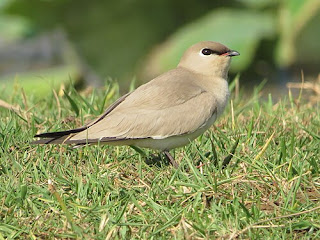
 The 𝐬𝐦𝐚𝐥𝐥 𝐩𝐫𝐚𝐭𝐢𝐧𝐜𝐨𝐥𝐞, 𝐥𝐢𝐭𝐭𝐥𝐞 𝐩𝐫𝐚𝐭𝐢𝐧𝐜𝐨𝐥𝐞, or 𝐬𝐦𝐚𝐥𝐥 𝐈𝐧𝐝𝐢𝐚𝐧 𝐩𝐫𝐚𝐭𝐢𝐧𝐜𝐨𝐥𝐞 (𝐆𝐥𝐚𝐫𝐞𝐨𝐥𝐚 𝐥𝐚𝐜𝐭𝐞𝐚) is a 𝐬𝐦𝐚𝐥𝐥 𝐰𝐚𝐝𝐞𝐫 in the 𝐩𝐫𝐚𝐭𝐢𝐧𝐜𝐨𝐥𝐞 𝐟𝐚𝐦𝐢𝐥𝐲, 𝐆𝐥𝐚𝐫𝐞𝐨𝐥𝐢𝐝𝐚𝐞. This species is only 𝟏𝟔.𝟓–𝟏𝟖.𝟓 𝐜𝐦 in 𝐥𝐞𝐧𝐠𝐭𝐡, with a 𝟒𝟐–𝟒𝟖 𝐜𝐦 𝐰𝐢𝐧𝐠𝐬𝐩𝐚𝐧.This bird has 𝐬𝐡𝐨𝐫𝐭 𝐥𝐞𝐠𝐬, 𝐥𝐨𝐧𝐠 𝐩𝐨𝐢𝐧𝐭𝐞𝐝 𝐰𝐢𝐧𝐠𝐬 and a 𝐬𝐡𝐨𝐫𝐭 𝐭𝐚𝐢𝐥. Its 𝐬𝐡𝐨𝐫𝐭 𝐛𝐢𝐥𝐥 is an 𝐚𝐝𝐚𝐩𝐭𝐚𝐭𝐢𝐨𝐧 to 𝐚𝐞𝐫𝐢𝐚𝐥 𝐟𝐞𝐞𝐝𝐢𝐧𝐠. The small pratincole is a 𝐫𝐞𝐬𝐢𝐝𝐞𝐧𝐭 𝐛𝐫𝐞𝐞𝐝𝐞𝐫 in 𝐈𝐧𝐝𝐢𝐚, 𝐖𝐞𝐬𝐭𝐞𝐫𝐧 𝐏𝐚𝐤𝐢𝐬𝐭𝐚𝐧, 𝐁𝐚𝐧𝐠𝐥𝐚𝐝𝐞𝐬𝐡, 𝐁𝐮𝐫𝐦𝐚, 𝐋𝐚𝐨𝐬, 𝐂𝐚𝐦𝐛𝐨𝐝𝐢𝐚, 𝐒𝐫𝐢 𝐋𝐚𝐧𝐤𝐚 and 𝐓𝐡𝐚𝐢𝐥𝐚𝐧𝐝.The small pratincole is a species of 𝐨𝐩𝐞𝐧 𝐜𝐨𝐮𝐧𝐭𝐫𝐲, and is often seen 𝐧𝐞𝐚𝐫 𝐰𝐚𝐭𝐞𝐫 in the 𝐞𝐯𝐞𝐧𝐢𝐧𝐠, 𝐡𝐚𝐰𝐤𝐢𝐧𝐠 𝐟𝐨𝐫 𝐢𝐧𝐬𝐞𝐜𝐭𝐬. The 𝐦𝐨𝐬𝐭 𝐮𝐧𝐮𝐬𝐮𝐚𝐥 𝐟𝐞𝐚𝐭𝐮𝐫𝐞 of the 𝐩𝐫𝐚𝐭𝐢𝐧𝐜𝐨𝐥𝐞𝐬 is that although classes as 𝐰?...

Oriental Magpie Robin

Image
 The 𝐎𝐫𝐢𝐞𝐧𝐭𝐚𝐥 𝐦𝐚𝐠𝐩𝐢𝐞-𝐫𝐨𝐛𝐢𝐧 (𝐂𝐨𝐩𝐬𝐲𝐜𝐡𝐮𝐬 𝐬𝐚𝐮𝐥𝐚𝐫𝐢𝐬) is a 𝐬𝐦𝐚𝐥𝐥 𝐩𝐚𝐬𝐬𝐞𝐫𝐢𝐧𝐞 𝐛𝐢𝐫𝐝 that was formerly classes as a member of the 𝐭𝐡𝐫𝐮𝐬𝐡 𝐟𝐚𝐦𝐢𝐥𝐲 𝐓𝐮𝐫𝐝𝐢𝐝𝐚𝐞, but now considered an 𝐎𝐥𝐝 𝐖𝐨𝐫𝐥𝐝 𝐟𝐥𝐲𝐜𝐚𝐭𝐜𝐡𝐞𝐫. They are 𝐝𝐢𝐬𝐭𝐢𝐧𝐜𝐭𝐢𝐯𝐞 𝐛𝐥𝐚𝐜𝐤 and 𝐰𝐡𝐢𝐭𝐞 birds with a 𝐥𝐨𝐧𝐠 𝐭𝐚𝐢𝐥 that is held 𝐮𝐩𝐫𝐢𝐠𝐡𝐭 as they forage on the ground or perch conspicuously. Occuring across most of the 𝐈𝐧𝐝𝐢𝐚𝐧 𝐬𝐮𝐛𝐜𝐨𝐧𝐭𝐢𝐧𝐞𝐧𝐭 and 𝐩𝐚𝐫𝐭𝐬 𝐨𝐟 𝐒𝐨𝐮𝐭𝐡𝐞𝐚𝐬𝐭 𝐀𝐬𝐢𝐚, they are common birds in 𝐮𝐫𝐛𝐚𝐧 𝐠𝐚𝐫𝐝𝐞𝐧𝐬 as well as 𝐟𝐨𝐫𝐞𝐬𝐭𝐬. They are particularly 𝐰𝐞𝐥𝐥 𝐤𝐧𝐨𝐰𝐧 for 𝐭𝐡𝐞𝐢𝐫 𝐬𝐨𝐧𝐠𝐬. This species is 𝟏𝟗 𝐜𝐞𝐧𝐭𝐢𝐦𝐞𝐭𝐫𝐞𝐬 𝐥𝐨𝐧𝐠, 𝐢𝐧𝐜𝐥𝐮𝐝𝐢𝐧𝐠 𝐭𝐡𝐞 𝐥𝐨𝐧𝐠 𝐭𝐚𝐢𝐥, which is usually held 𝐜𝐨𝐜𝐤𝐞𝐝 𝐮𝐩𝐫𝐢𝐠𝐡𝐭 when 𝐡𝐨𝐩𝐩𝐢𝐧𝐠 𝐨𝐧 𝐭𝐡𝐞 𝐠𝐫𝐨𝐮𝐧𝐝. When they are 𝐬𝐢𝐧𝐠𝐢𝐧𝐠 𝐚 𝐬𝐨𝐧𝐠 the tail is 𝐧𝐨𝐫𝐦𝐚𝐥 like other birds. The 𝐦...

Asian Green Bee-Eater

Image
 The 𝐀𝐬𝐢𝐚𝐧 𝐠𝐫𝐞𝐞𝐧 𝐛𝐞𝐞-𝐞𝐚𝐭𝐞𝐫 (𝐌𝐞𝐫𝐨𝐩𝐬 𝐨𝐫𝐢𝐞𝐧𝐭𝐚𝐥𝐢𝐬) is a near 𝐩𝐚𝐬𝐬𝐞𝐫𝐢𝐧𝐞 bird in the 𝐛𝐞𝐞-𝐞𝐚𝐭𝐞𝐫 𝐟𝐚𝐦𝐢𝐥𝐲. It is 𝐫𝐞𝐬𝐢𝐝𝐞𝐧𝐭 but prone to 𝐬𝐞𝐚𝐬𝐨𝐧𝐚𝐥 𝐦𝐨𝐯𝐞𝐦𝐞𝐧𝐭𝐬 and is found widely distributed 𝐚𝐜𝐫𝐨𝐬𝐬 𝐀𝐬𝐢𝐚 from 𝐜𝐨𝐚𝐬𝐭𝐚𝐥 𝐬𝐨𝐮𝐭𝐡𝐞𝐫𝐧 𝐈𝐫𝐚𝐧 𝐞𝐚𝐬𝐭 through the 𝐈𝐧𝐝𝐢𝐚𝐧 𝐬𝐮𝐛𝐜𝐨𝐧𝐭𝐢𝐧𝐞𝐧𝐭 to 𝐕𝐢𝐞𝐭𝐧𝐚𝐦.They are mainly 𝐢𝐧𝐬𝐞𝐜𝐭 𝐞𝐚𝐭𝐞𝐫𝐬 and they are found in 𝐠𝐫𝐚𝐬𝐬𝐥𝐚𝐧𝐝, 𝐭𝐡𝐢𝐧 𝐬𝐜𝐫𝐮𝐛 and 𝐟𝐨𝐫𝐞𝐬𝐭 often quite 𝐟𝐚𝐫 from 𝐰𝐚𝐭𝐞𝐫. It is about 𝟐𝟑𝟎 𝐦𝐦 𝐥𝐨𝐧𝐠  with about 𝟓𝟏 𝐦𝐦 made up by the 𝐞𝐥𝐨𝐧𝐠𝐚𝐭𝐞𝐝 𝐜𝐞𝐧𝐭𝐫𝐚𝐥 𝐭𝐚𝐢𝐥-𝐟𝐞𝐚𝐭𝐡𝐞𝐫𝐬. The sexes are 𝐧𝐨𝐭 𝐯𝐢𝐬𝐮𝐚𝐥𝐥𝐲 𝐝𝐢𝐬𝐭𝐢𝐧𝐠𝐮𝐢𝐬𝐡𝐚𝐛𝐥𝐞. The entire 𝐩𝐥𝐮𝐦𝐚𝐠𝐞 is 𝐛𝐫𝐢𝐠𝐡𝐭 𝐠𝐫𝐞𝐞𝐧 and 𝐭𝐢𝐧𝐠𝐞𝐝 with 𝐛𝐥𝐮𝐞 especially on the 𝐜𝐡𝐢𝐧 and 𝐭𝐡𝐫𝐨𝐚𝐭.The 𝐜𝐫𝐨𝐰𝐧 and 𝐮𝐩𝐩𝐞𝐫 𝐛𝐚𝐜𝐤 are 𝐭𝐢𝐧𝐠𝐞𝐝 with 𝐠𝐨𝐥𝐝𝐞𝐧 𝐫𝐮𝐟𝐨𝐮𝐬. The 𝐟𝐥𝐢𝐠𝐡...

Red Kite

Image
 The 𝐫𝐞𝐝 𝐤𝐢𝐭𝐞 (𝐌𝐢𝐥𝐯𝐮𝐬 𝐦𝐢𝐥𝐯𝐮𝐬) is a 𝐦𝐞𝐝𝐢𝐮𝐦-𝐥𝐚𝐫𝐠𝐞 bird of prey in the family 𝐀𝐜𝐜𝐢𝐩𝐢𝐭𝐫𝐢𝐝𝐚𝐞, which also includes many other 𝐝𝐢𝐮𝐫𝐧𝐚𝐥 𝐫𝐚𝐩𝐭𝐨𝐫𝐬 such as 𝐞𝐚𝐠𝐥𝐞𝐬, 𝐛𝐮𝐳𝐳𝐚𝐫𝐝𝐬, and 𝐡𝐚𝐫𝐫𝐢𝐞𝐫𝐬. The species currently breeds only in 𝐄𝐮𝐫𝐨𝐩𝐞, though it formerly also bred in 𝐰𝐞𝐬𝐭 𝐀𝐬𝐢𝐚 and 𝐧𝐨𝐫𝐭𝐡𝐰𝐞𝐬𝐭 𝐀𝐟𝐫𝐢𝐜𝐚.The red kite was described by the 𝐒𝐰𝐞𝐝𝐢𝐬𝐡 𝐧𝐚𝐭𝐮𝐫𝐚𝐥𝐢𝐬𝐭 𝐂𝐚𝐫𝐥 𝐋𝐢𝐧𝐧𝐚𝐞𝐮𝐬 in 𝟏𝟕𝟓𝟖 in the 𝟏𝟎𝐭𝐡 𝐞𝐝𝐢𝐭𝐢𝐨𝐧 of his 𝐒𝐲𝐬𝐭𝐞𝐦𝐚 𝐍𝐚𝐭𝐮𝐫𝐚𝐞 under the 𝐛𝐢𝐧𝐨𝐦𝐢𝐚𝐥 𝐧𝐚𝐦𝐞 𝐅𝐚𝐥𝐜𝐨 𝐦𝐢𝐥𝐯𝐮𝐬. Red kites are 𝟔𝟎 to 𝟕𝟎 𝐜𝐦 𝐥𝐨𝐧𝐠 with a 𝟏𝟕𝟓–𝟏𝟗𝟓 𝐜𝐦 𝐰𝐢𝐧𝐠𝐬𝐩𝐚𝐧,𝐦𝐚𝐥𝐞𝐬 weigh 𝟖𝟎𝟎–𝟏,𝟐𝟎𝟎 𝐠, and 𝐟𝐞𝐦𝐚𝐥𝐞𝐬 𝟏,𝟎𝟎𝟎–𝟏,𝟑𝟎𝟎 𝐠.The 𝐛𝐨𝐝𝐲, 𝐮𝐩𝐩𝐞𝐫 𝐭𝐚𝐢𝐥 and 𝐰𝐢𝐧𝐠 𝐜𝐨𝐯𝐞𝐫𝐭𝐬 are 𝐫𝐮𝐟𝐨𝐮𝐬.  The red kites are 𝐠𝐞𝐧𝐞𝐫𝐚𝐥𝐢𝐬𝐭 𝐬𝐜𝐚𝐯𝐞𝐧𝐠𝐞𝐫𝐬 and  𝐩𝐫𝐞𝐝𝐚𝐭𝐨𝐫𝐬. Their diet consists mainly o...

Black Kite

Image
 The 𝐛𝐥𝐚𝐜𝐤 𝐤𝐢𝐭𝐞 (𝐌𝐢𝐥𝐯𝐮𝐬 𝐦𝐢𝐠𝐫𝐚𝐧𝐬) is a 𝐦𝐞𝐝𝐢𝐮𝐦-𝐬𝐢𝐳𝐞𝐝  bird of prey in the family 𝐀𝐜𝐜𝐢𝐩𝐢𝐭𝐫𝐢𝐝𝐚𝐞. Black kites can be distinguished from red kites by the 𝐬𝐥𝐢𝐠𝐡𝐭𝐥𝐲 𝐬𝐦𝐚𝐥𝐥𝐞𝐫 𝐬𝐢𝐳𝐞, 𝐥𝐞𝐬𝐬 𝐟𝐨𝐫𝐤𝐞𝐝 𝐭𝐚𝐢𝐥 and 𝐠𝐞𝐧𝐞𝐫𝐚𝐥𝐥𝐲 𝐝𝐚𝐫𝐤 𝐩𝐥𝐮𝐦𝐚𝐠𝐞 𝐰𝐢𝐭𝐡𝐨𝐮𝐭 𝐚𝐧𝐲 𝐫𝐮𝐟𝐨𝐮𝐬. The sexes are 𝐚𝐥𝐢𝐤𝐞 though the 𝐦𝐚𝐥𝐞 is a little 𝐬𝐦𝐚𝐥𝐥𝐞𝐫 and 𝐥𝐞𝐬𝐬 𝐚𝐠𝐠𝐫𝐞𝐬𝐬𝐢𝐯𝐞 . They weigh on average 𝟕𝟑𝟓 𝐠𝐫𝐚𝐦𝐬. The 𝐮𝐩𝐩𝐞𝐫 𝐩𝐥𝐮𝐦𝐚𝐠𝐞 is 𝐛𝐫𝐨𝐰𝐧 but the 𝐡𝐞𝐚𝐝 and 𝐧𝐞𝐜𝐤 tend to be 𝐩𝐚𝐥𝐞𝐫.The 𝐥𝐨𝐰𝐞𝐫 𝐩𝐚𝐫𝐭𝐬 of the body are 𝐩𝐚𝐥𝐞 𝐛𝐫𝐨𝐰𝐧, becoming 𝐥𝐢𝐠𝐡𝐭𝐞𝐫 towards the 𝐜𝐡𝐢𝐧. The 𝐛𝐢𝐥𝐥 is 𝐛𝐥𝐚𝐜𝐤 , the 𝐥𝐞𝐠𝐬 are 𝐲𝐞𝐥𝐥𝐨𝐰 and the 𝐜𝐥𝐚𝐰𝐬 are 𝐛𝐥𝐚𝐜𝐤.. They have a distinctive 𝐬𝐡𝐫𝐢𝐥𝐥 𝐰𝐡𝐢𝐬𝐭𝐥𝐞 followed by a 𝐫𝐚𝐩𝐢𝐝 𝐰𝐡𝐢𝐧𝐧𝐲𝐢𝐧𝐠 𝐜𝐚𝐥𝐥.Their 𝐰𝐢𝐧𝐠𝐬𝐩𝐚𝐧 is around 𝟏𝟓𝟎 𝐜𝐦. The species is found in 𝐄𝐮𝐫𝐨𝐩𝐞, 𝐀𝐬...

Indian Pond Heron

Image
 The 𝐈𝐧𝐝𝐢𝐚𝐧 𝐩𝐨𝐧𝐝 𝐡𝐞𝐫𝐨𝐧 or 𝐩𝐚𝐝𝐝𝐲𝐛𝐢𝐫𝐝 (𝐀𝐫𝐝𝐞𝐨𝐥𝐚 𝐠𝐫𝐚𝐲𝐢𝐢) is a small heron. It is of 𝐎𝐥𝐝 𝐖𝐨𝐫𝐥𝐝 origins, breeding in 𝐬𝐨𝐮𝐭𝐡𝐞𝐫𝐧 𝐈𝐫𝐚𝐧 and 𝐞𝐚𝐬𝐭 to the 𝐈𝐧𝐝𝐢𝐚𝐧 𝐬𝐮𝐛𝐜𝐨𝐧𝐭𝐢𝐧𝐞𝐧𝐭, 𝐁𝐮𝐫𝐦𝐚, and 𝐒𝐫𝐢 𝐋𝐚𝐧𝐤𝐚. Indian pond herons are stocky with 𝐬𝐡𝐨𝐫𝐭 𝐧𝐞𝐜𝐤𝐬, 𝐬𝐡𝐨𝐫𝐭 𝐭𝐡𝐢𝐜𝐤 𝐛𝐢𝐥𝐥𝐬 and 𝐛𝐮𝐟𝐟-𝐛𝐫𝐨𝐰𝐧 𝐛𝐚𝐜𝐤𝐬. . In 𝐬𝐮𝐦𝐦𝐞𝐫, adults have 𝐥𝐨𝐧𝐠 𝐧𝐞𝐜𝐤 𝐟𝐞𝐚𝐭𝐡𝐞𝐫𝐬. During the 𝐛𝐫𝐞𝐞𝐝𝐢𝐧𝐠 𝐬𝐞𝐚𝐬𝐨𝐧, there are records of individuals with 𝐫𝐞𝐝 𝐥𝐞𝐠𝐬.  They are very common in 𝐈𝐧𝐝𝐢𝐚, and are usually 𝐬𝐨𝐥𝐢𝐭𝐚𝐫𝐲 𝐟𝐨𝐫𝐚𝐠𝐞𝐫𝐬 but numbers of them may sometimes feed in close proximity during the 𝐝𝐫𝐲 𝐬𝐞𝐚𝐬𝐨𝐧𝐬 when 𝐬𝐦𝐚𝐥𝐥 𝐰𝐞𝐭𝐥𝐚𝐧𝐝𝐬 have a 𝐡𝐢𝐠𝐡 𝐜𝐨𝐧𝐜𝐞𝐧𝐭𝐫𝐚𝐭𝐢𝐨𝐧 𝐨𝐟 𝐩𝐫𝐞𝐲. The Indian pond heron's feeding habitat is 𝐦𝐚𝐫𝐬𝐡𝐲 𝐰𝐞𝐭𝐥𝐚𝐧𝐝𝐬. The primary food of these birds includes 𝐜𝐫𝐮𝐬𝐭𝐚𝐜𝐞𝐚𝐧𝐬, 𝐚𝐪𝐮𝐚𝐭𝐢𝐜 ?...

White Stork

Image
 The 𝐰𝐡𝐢𝐭𝐞 𝐬𝐭𝐨𝐫𝐤 (𝐂𝐢𝐜𝐨𝐧𝐢𝐚 𝐜𝐢𝐜𝐨𝐧𝐢𝐚) is a large bird in the stork family, 𝐂𝐢𝐜𝐨𝐧𝐢𝐢𝐝𝐚𝐞.  Its plumage is mainly 𝐰𝐡𝐢𝐭𝐞, with 𝐛𝐥𝐚𝐜𝐤 on the bird's wings. The white stork has a length of 𝟏𝟎𝟎 to 𝟏𝟏𝟓 𝐜𝐦  and a standing height of 𝟏𝟎𝟎 to 𝟏𝟐𝟓 𝐜𝐦. The wingspan is 𝟏𝟓𝟓 to 𝟐𝟏𝟓 𝐜𝐦 and its weight is 𝟐.𝟑 to 𝟒.𝟓 𝐤𝐠 . The sexes are identical in appearance, except that males are larger than females. The white stork is a 𝐥𝐨𝐧𝐠 𝐝𝐢𝐬𝐭𝐚𝐧𝐜𝐞 𝐦𝐢𝐠𝐫𝐚𝐧𝐭, wintering in 𝐀𝐟𝐫𝐢𝐜𝐚 from 𝐭𝐫𝐨𝐩𝐢𝐜𝐚𝐥 𝐒𝐮𝐛-𝐒𝐚𝐡𝐚𝐫𝐚𝐧 𝐀𝐟𝐫𝐢𝐜𝐚 to 𝐒𝐨𝐮𝐭𝐡 𝐀𝐟𝐫𝐢𝐜𝐚, or on the 𝐈𝐧𝐝𝐢𝐚𝐧 𝐬𝐮𝐛𝐜𝐨𝐧𝐭𝐢𝐧𝐞𝐧𝐭.  White storks consume a wide variety of animal prey. Common food items include insects like 𝐛𝐞𝐞𝐭𝐥𝐞𝐬, 𝐠𝐫𝐚𝐬𝐬𝐡𝐨𝐩𝐩𝐞𝐫𝐬, 𝐥𝐨𝐜𝐮𝐬𝐭𝐬 𝐚𝐧𝐝 𝐜𝐫𝐢𝐜𝐤𝐞𝐭𝐬; 𝐞𝐚𝐫𝐭𝐡𝐰𝐨𝐫𝐦𝐬, 𝐫𝐞𝐩𝐭𝐢𝐥𝐞𝐬, 𝐚𝐦𝐩𝐡𝐢𝐛𝐢𝐚𝐧𝐬, particularly frog species such as the 𝐞𝐝𝐢𝐛𝐥𝐞 𝐟𝐫𝐨𝐠 and 𝐜𝐨?...